Trading Psychology: Recovering From Big Losses
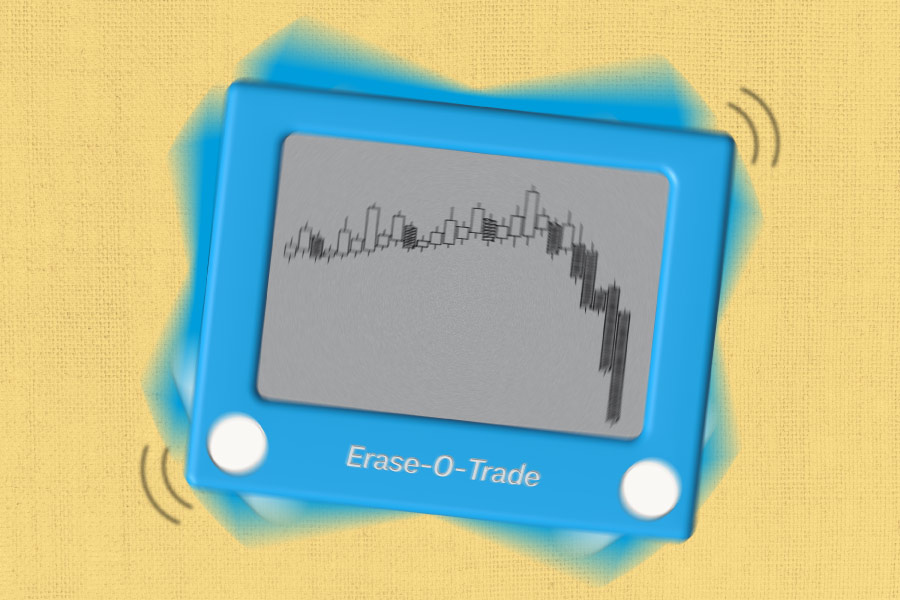
According to trading lore, the world's most successful trader could share their exact system with a losing trader—teaching them how and where to enter and exit, what to buy and sell, and how to size their positions—and the losing trader would still just keep losing with the new system.
Why? All else being equal, success or failure in trading comes down to mindset. If a trader doesn't have the emotional self-control to execute a trading plan—taking losses and profits with the same cool-headed discipline—no system will ever make them consistently profitable.
That's why some hedge funds hire psychologists to coach their traders. Even a modest losing streak can mess with a trader's head, interfering with their execution and ultimately their profit-loss statement. A single catastrophic loss or devastating series of losses can completely derail a trader, even pushing them out of the markets for good.
To trade profitably after a massive loss—one far outside the scope of their trading plan—traders need to process the setback constructively and take steps to prevent lingering after-effects from impacting future trades.
Immediate impacts of a trading blowup
When a trader suffers a large financial loss, the brain reacts similarly to how it handles physical or emotional pain. In other words, the brain treats the loss as a threat, making the trader more likely to make near-term trading decisions based on emotion and the desire to stop the bleeding.
A big financial loss also releases high levels of the stress hormone cortisol, which studies have been linked with higher levels of risk-taking in traders. In a live market, this can impair decision-making and self-control, which helps explain the downward spiral of "revenge trading" that fuels many catastrophic trading blowups. In the days and weeks after such a loss, the trader's body often keeps releasing cortisol as they replay the loss in their head and worry about what's to come. It becomes a vicious cycle, as this ongoing stress and uncertainty can keep cortisol levels elevated for weeks.
How a blowup hinders future trading
A devastating loss can start a downward spiral if traders don't take steps to process it effectively. Like getting back behind the wheel after a car crash, getting back into the market with money on the line triggers stress. Some traders even experience PTSD-like symptoms.
The lingering effects of a blowup can hurt a trader's decision-making by slowing down thinking and hindering deeper thought. The combination of a heightened emotional state and shallow thinking can lead to typical bad behaviors, such as ignoring stops, selling winners too soon, and doubling down after a loss.
Behavioral finance shows that jumping right back into the market after a devastating loss can also result in extreme risk aversion, or "freezing up." A trader may watch a loss grow and grow long after knowing they should get out, unwilling to accept the pain of another loss, or they may watch one good trade after another pass them by because they couldn't pull the trigger. They may begin to irrationally question or repeatedly tweak their trading system.
At the other extreme, blowups may cause some traders to become overly aggressive as they desperately seek to "erase" the offending loss—and the pain it caused—and prove their worth as a trader by quickly recouping the shortage.
Ultimately, whether risk-averse or risk-seeking, the impacted trader can let emotions take over their decision-making abilities. Studies have consistently linked intense emotional reactions to poor trading performance.
Cleaning the slate
Whatever the reason for the blowup, traders can get past it, but positive thinking alone won't do the trick. They need to think about the blowup in constructive ways and learn to manage the emotions they will likely experience when market triggers pop up in the future. Several practices are effective at eliminating mental hurdles in traders, athletes, and other high-pressure performers.
Cool off
The first thing to do is step away from the market. This can be hard. Many traders feel a strong urge to jump right back in and start to regain their footing. But trading while stressed is not a recipe for success. Rather, a cooling-off period lets stress dissipate and gives traders time to gain some perspective and process what happened.
Rethink it
To get past a trading blowup, traders can begin by changing their perspective. Every mistake provides an opportunity to learn how to avoid similar slip-ups in the future, and cognitive reframing can potentially help traders learn important lessons, rather than stew in the aftermath.
Cognitive behavioral therapy (CBT), for example, may help traders change their beliefs about a big loss, which in turn may help lift some of the psychological weight and break the feedback loop between market triggers and unwanted behaviors.
The basic approach includes:
- Challenge thoughts and assumptions about the loss, especially those that might be self-defeating. Put thoughts on "trial," treating them as hypotheses that need to be tested.
- Examine the consequences of self-defeating and inaccurate thought patterns to reinforce the need for change.
- Use physical anchors to shift away from emotion-based or unconscious reactions to more deliberate, well-considered ones.
Dealing with guilt and shame. Shame, guilt, and self-sabotage often follow a massive loss, especially if it resulted from the trader breaking their own trading rules. Traders feel guilty not only for the financial loss, which may impact other trades, but also for failing to live up to their own expectations.
But these feelings are often exaggerated and based on a distortion of the facts. Regardless, they transform future trades into threats against a trader's self-worth. Practicing self-compassion may help blunt those feelings as well as mitigate the rumination that can deepen the sense of shame and keep stress levels elevated. CBT may help disrupt the "logic" behind catastrophizing thoughts such as "I'm going to lose all our money."
Write about it
Psychological studies suggest that when athletes write about performance failures, it can reduce the mental impact and help them reframe the event as a set of lessons instead.
Labeling an emotion affects brain activity. Writing down what you're feeling lowers activity in the amygdala, the brain's fear center, and increases activity in the prefrontal cortex, the logic center. Writing about worries before a high-pressure event frees up working memory, allowing more capacity to focus on the task at hand. One study found that students who wrote about their test-taking anxiety scored higher on the exams that immediately followed.
Get mindful
Mindfulness meditation has been shown to lower stress and improve emotional control by tamping down reactions to these emotions. The practice may help traders recognize and acknowledge market triggers as they occur and then take steps to avoid or counteract the emotion-based behaviors that typically follow. For example, traders can potentially learn to take a loss while executing their trading plan without doubling down on the next trade in a misguided effort to make up for the loss.
In fact, mindfulness has been linked to stronger discipline among traders. One study found that those who practiced mindfulness more intensively performed better than those who practiced less intensively. Another study found that traders who practiced mindfulness demonstrated lower cortisol levels and higher testosterone levels—and they reported higher earnings than traders with higher testosterone and higher cortisol.
Visualize ideal execution
Mental visualization has become common among many elite athletes—most famously Tiger Woods—looking to improve their performance. Traders struggling to remain disciplined and rebuild confidence in their ability to follow their trading plan should incorporate a brief visualization practice into their pre-market routine. If a trader mentally practices the ideal response to certain situations, it should help them execute when those situations arise for real. It's important to visualize not only flawless execution of routine trades but also responses to unexpected difficulties.
Ease back into the market
Regardless of how a trader processes a blowup, it's best to get back into the market gradually by employing one of the following tactics:
- Trade with paper money. Short-term traders should consider trading with paper, or fake, money (a simulator like the paperMoney® feature of the thinkorswim® platform) before putting real money on the line. This helps re-establish proper trading habits in a stress-free environment, helping bolster shaken confidence. Paper trading can also be used to practice new techniques for handling market triggers. Only when a trader demonstrates consistent adherence to their trading rules should they transition to risking real money.
- Reduce position size. Less money at risk equals less pressure and clearer thinking. Traders can then increase position size as they demonstrate a new track record of executing their system.
Make decisions automatic
The best way to prevent emotion-based trading decisions is to automate entries and exits—particularly exits. Many professional trading systems set stops automatically for losses and profits to eliminate second-guessing in the heat of the moment. They can also implement "circuit breakers" to prevent additional trading after a certain level of loss in a day.
Traders should at least have written "if, then" plans to help limit emotion-based actions and prevent additional big losses and should consciously commit to these plans before every trading session. For example, they could pledge to step away for the day if they lose a certain amount of money or take 15 minutes if they feel an urge to break a trading rule.
Bottom line
A major loss doesn't need to mark the end of a trader's time in the market. By using tactics like cognitive reframing and gradual market re-entry, traders can return to their plans with renewed confidence and self-control. Ultimately, trading is a marathon, not a sprint, and even the most seasoned runners trip up occasionally.